
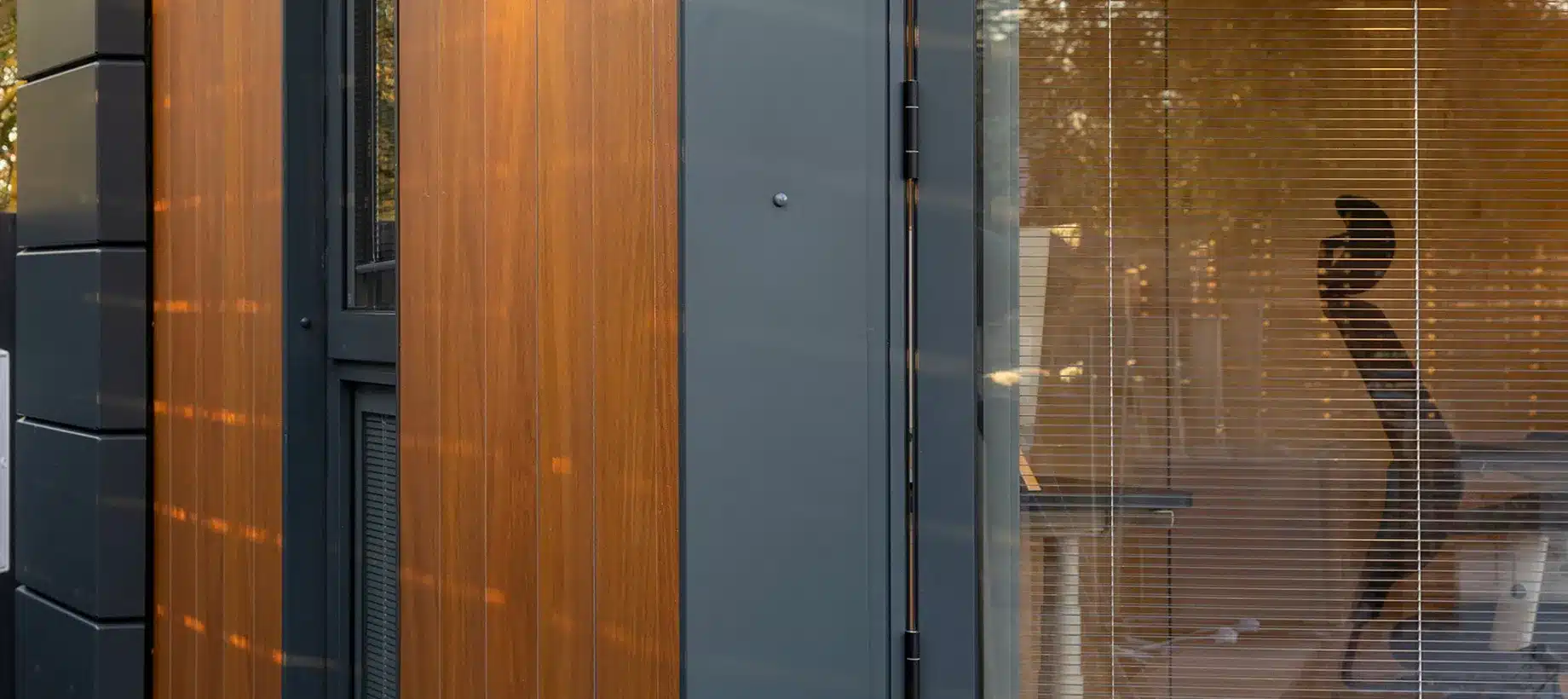
Your garden room should be the perfect addition to your property. It should offer the space you require and a look that suits both your garden and your taste. Your building could also satisfy any environmental concerns you may have and must meet your needs regarding durability and maintenance.
All of which means that your choice of external cladding matters. Your cladding will impact the look of your garden room, its durability and the level of maintenance it requires.
So, should you choose composite or wooden cladding and if you favour wood, which type of wood is worthy of your consideration?
Composite garden room cladding
Composite cladding is made from a combination of recycled materials. These include wood fibres and plastics. Composite boards also feature bonding agents and colourings. This type of cladding boasts the general appearance of wood but does not have a completely natural look.
Benefits of composite cladding
- Durability – composite cladding is more durable than timber and won’t warp in wet weather or heat. The boards are sealed with a polymer that protects them from the elements.
- Low maintenance – this type of cladding requires minimal maintenance.
- Environmentally friendly – composite cladding is made from recycled materials and so reduces wood and plastic waste. The production process is energy efficient.
- Contemporary – this cladding delivers a contemporary feel and can enable you to choose shades such as grey that are not found in natural wood.
- Resistant to fire – composite boards are less flammable than any type of timber.
Downsides of composite cladding
- Cost – generally more expensive than timber to purchase, but it will outlive natural timber.
- Aesthetics – the look isn’t everyone’s cup of tea.
Timber garden room cladding
There are several types of timber to consider, each offering specific pros and cons:
Western red cedar
Pros:
- Natural beauty – this wood boasts distinctive rich hues of orange and red together with a straight grain and medium-to-coarse texture.
- Durability – red cedar is resistant to decay and insect damage courtesy of its natural oils.
- Highly workable – red cedar is lightweight and easy to work with.
- Sustainability – renewable red cedar resources are available.
Cons:
- Maintenance – requires regular staining or oiling.
- Cost – western red cedar is more expensive than many timber alternatives.
Redwood
Pros:
- Natural Beauty – redwood boasts attractive pale golden hues and can be painted.
- Cost – a low cost option, indeed, one of the cheapest forms of cladding.
- Sustainability – a renewable resource and one with a moderate carbon footprint.
Cons:
- Durability – redwood is a softwood and so is prone to twisting, warping and splitting. May only last 5 years.
Larch
Pros:
- Strength – a tough and durable choice.
- Beauty – ages gracefully and boasts a warm feel with its yellow to medium brown hues. Larch has a strong grain and medium to fine texture. It would lend character to your building.
- Stability – resists warping better than some softwoods including redwood.
- Cost-Effective – generally less expensive than cedar or composite boards.
Cons:
- Maintenance – requires regular treatments because it fades and loses its colour.
- Stability: larch boards shrink and expand through the year and so can move or distort.
Charred larch
Pros:
- Aesthetic – modern, rustic appearance and strong grain.
- Durability – resistant to pests and fire. The charred layer provides some protection from the elements.
Cons:
- Maintenance – requires periodic treatments as it will fade and lose its colour.
- Cost – charring is labour-intensive and so this type of timber can be costly.
- Dark hue – can require large areas of glazing to break up the expanse of dark wood.
Yellow cedar
Pros:
- Beauty – pale yellow hues, sometimes almost white. Uniform grain and fine texture. Takes stains and finishes well. Can be stained to resemble western red cedar.
- Workability – yellow cedar’s fine texture and straight grain ensure that it is easy to work with.
- Durability – dimensionally stable and pest-resistant.
- Cost – less expensive than western red cedar.
Cons:
- Maintenance – will require regular treatment to preserve its colour or stain.
European oak
Pros:
- Aesthetics – golden-brown hue. Coarse grain, uneven texture. Can be enhanced with a stain.
- Durability – a hardwood that is tough and long-lasting.
Cons:
- Cost- oak is more costly than many softwoods due to its long growth cycle.
- Instability – this wood can shrink, expand and split. It will develop a silvery patina over time.
- Workability – oak is heavy and tough which can make drilling and screwing more difficult.
Heat-treated timber (thermowood)
Pros:
- Stability – heat-treated timber is less prone to warping and shrinking.
- Durability – thermowood boasts improved resistance to decay and insects.
- Aesthetic – various options offer different shades and grains but heat-treated timbers boast dark hues.
Cons:
- Colour Fading – will silver off over time if not regularly oiled.
- May require plenty of glazed features to break up dark expanses of cladding.
Conclusions
The best choice of cladding for your project will depend on your taste, your budget and the level of maintenance you are prepared to undertake. It is important to remember that while larch and redwood are the least expensive options, these woods won’t last as long as cedar or composite boards and so may prove to be more expensive in the long run. Composite cladding will certainly outlast any timber cladding. It will require far less maintenance and is the most eco-friendly option.
But if you relish the natural beauty of wood, you have excellent choices at your disposal. The variety of colours, grains and textures ensure that you will find timber cladding that you love.

Posted by Kennedy Garden Retreats